
Dropbox to Google Drive Migration Guide
This guide shows you how to migrate Dropbox files and folders to Google Drive. Migrate documents, permissions, folder structures, and metadata.
Overview
This Dropbox to Google Drive Migration Guide shows you how to migrate your Dropbox files and folders to Google Drive using the Cloudiway platform.
Looking for our Dropbox to Google Drive Migration Solution?
Discover all features, pricing, and use cases for Dropbox to Google Drive migrations.
View Solution PageWhat's Migrated
The following items are migrated from Dropbox to Google Drive:
Limitations
The following items are not migrated or have limitations:
- Dropbox Shared Links: Shared links are not migrated and must be recreated in Google Drive.
- Dropbox Comments: File comments are not migrated to Google Drive.
- Dropbox File Requests: File request links are not migrated.
- Dropbox Integrations: Third-party app integrations are not migrated.
- External Collaborators: External users must be re-invited in Google Drive.
- Dropbox Showcase: Showcase presentations are not migrated.
Prerequisites
To perform the Dropbox to Google Drive migration, you need admin access to both platforms.
Dropbox Requirements
Dropbox Team Admin Account
A Dropbox Business Team Admin account with access to all team members' content
Dropbox Business
Dropbox Business Standard, Advanced, or Enterprise subscription for API access
Google Workspace Requirements
Google Workspace Super Admin
Google Workspace Super Admin account to configure the service account
Service Account
A Google Cloud service account with domain-wide delegation enabled
Google Drive Licenses
Target users must have Google Workspace licenses with Google Drive access
Migration Process
The Dropbox to Google Drive migration follows these steps:
Step 1: Create Connectors
Create connectors for both Dropbox and Google Workspace.
Dropbox Source Connector
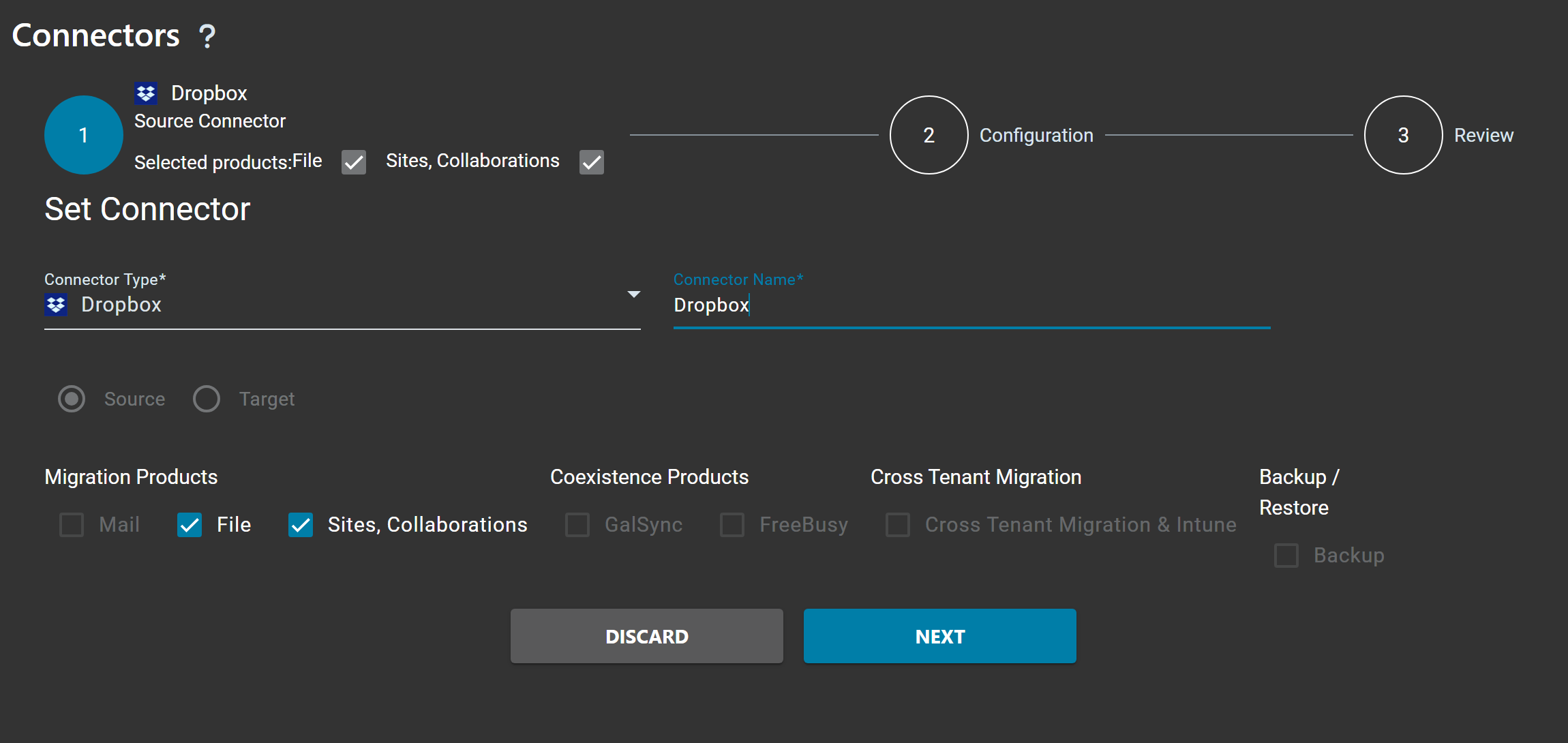
Go to Connectors > New, select Dropbox as connector type and select Files.
Click the Get Access Token button to authorize Cloudiway to access your Dropbox account.
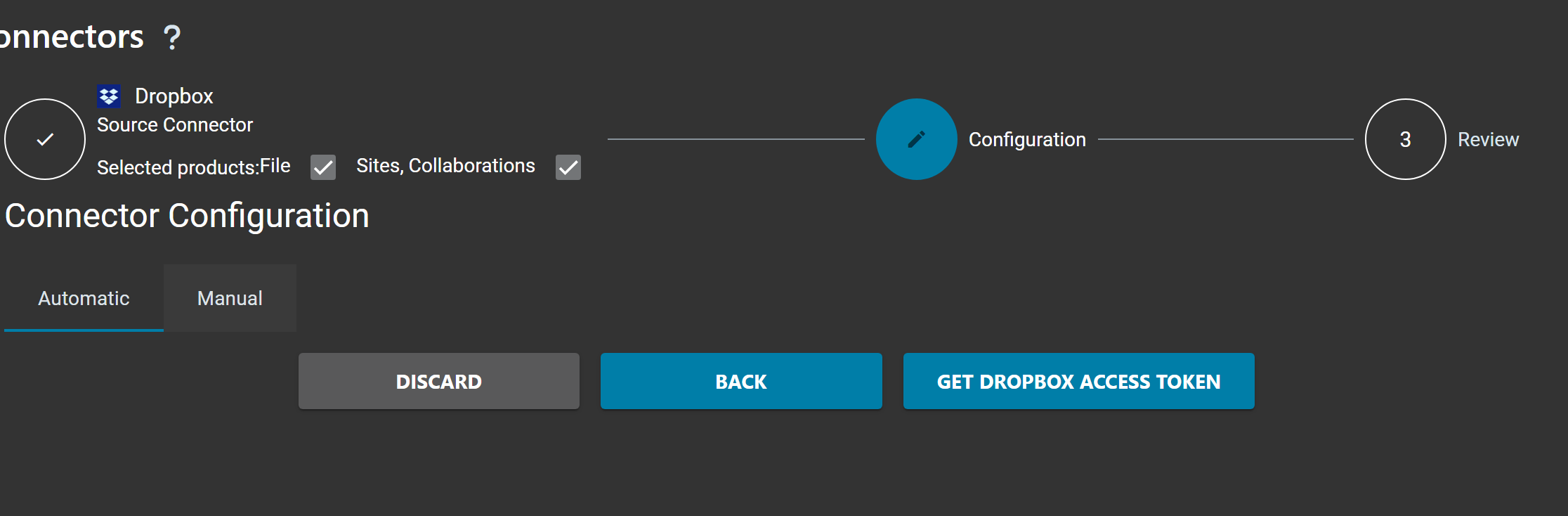
You'll be redirected to Dropbox. Log in with your administrator account and approve the permissions requested by Cloudiway.
Once authorized, your connector is created and ready to use.
Google Workspace Target Connector
Create a Google Workspace connector for the target Google Drive. Go to Connectors > New, select Google Workspace and Files.
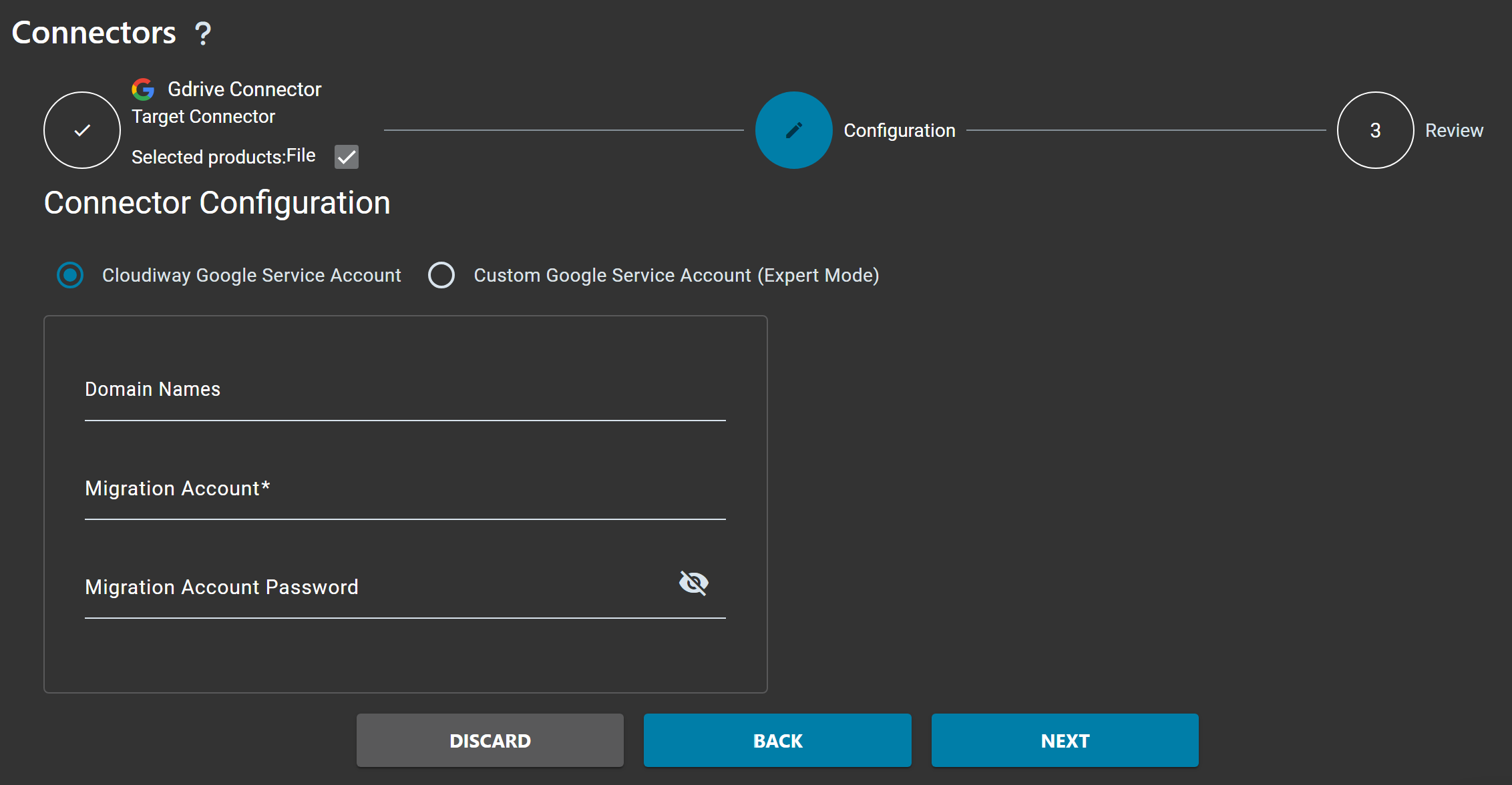
There are two modes to create the Google Workspace connector:
Automatic Mode (Recommended)
Cloudiway provides a pre-configured service account. You only need to set up domain-wide delegation in your Google Admin Console to authorize the Cloudiway service account to access your domain.
Refer to the documentation: Google Workspace Connector Configuration (see Step 3: Set Up Domain-Wide Delegation)
Manual Mode
If you prefer to create and configure your own service account, you'll need to provide:
- Service Account Email: The email address of your Google Cloud service account
- Private Key: The private key from your service account JSON file
- Admin Email: A Google Workspace Super Admin email for impersonation
For manual setup, refer to the documentation: How to create a Google Service Account
Step 2: Fill User List
To retrieve or upload your Dropbox users, select the User List tab under the Files product. There are three ways to populate the migration list.
Option 1: Discovery (Get List)
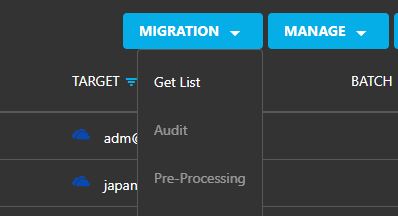
Under MIGRATION, click on the Get List option to discover all Dropbox team members.
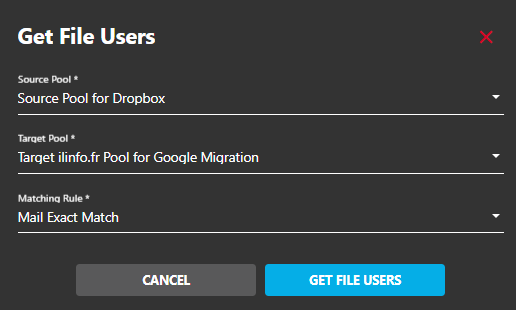
Select your source Dropbox connector, target connector, and matching method. Click GET FILE USERS to start the discovery process. All Dropbox team members with their root folders will be listed.
Option 2: CSV Import File
The second way to populate the migration list is to upload a CSV file.
Check this article for generating the CSV file correctly: How to fill the Users/Groups CSV file
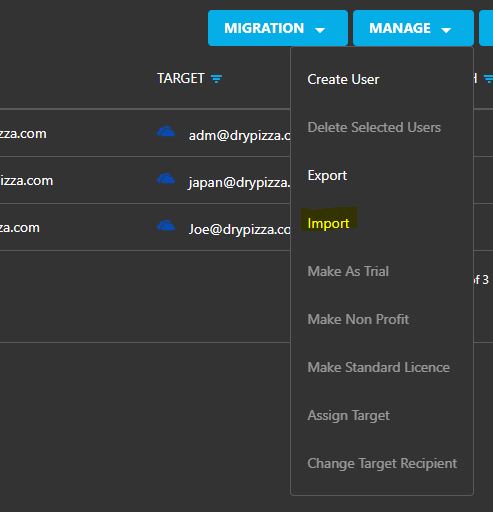
Click MANAGE > Import:
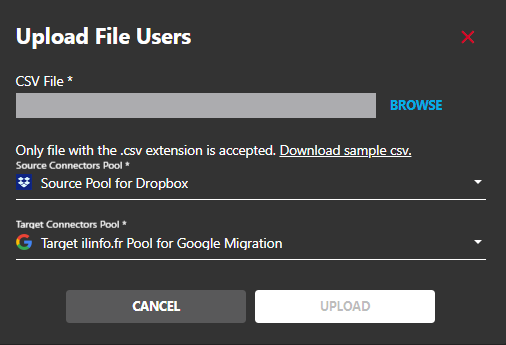
Select the CSV File, the Source and Target Connectors, then click Upload.
Option 3: Manual Creation
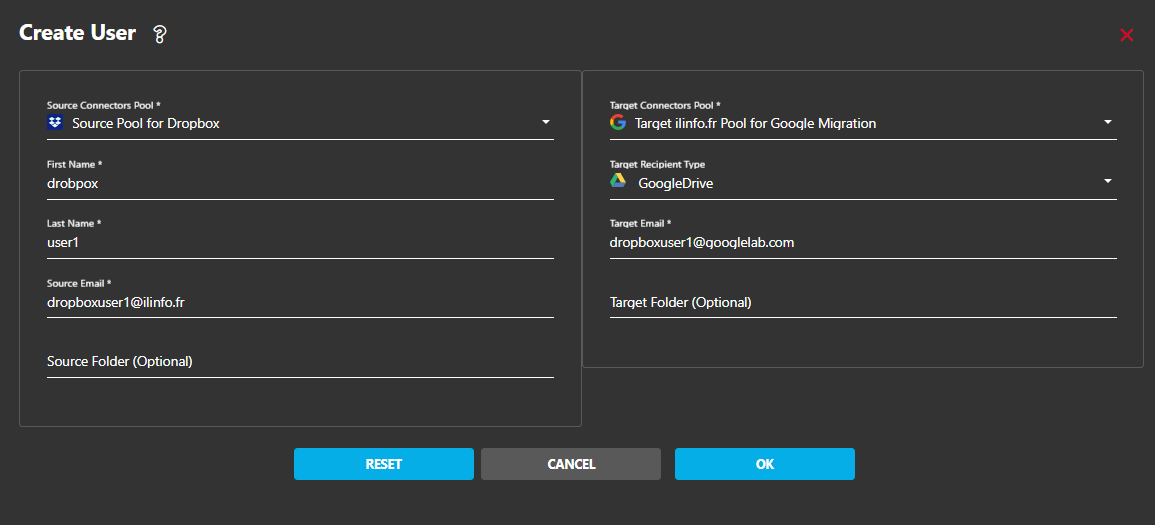
The third way is to manually create an entry. Click the MANAGE tab, and from the drop-down list click Create.
| Field | Description |
|---|---|
| Source Connectors Pool | Select your Dropbox source connector |
| First Name | The user's first name |
| Last Name | The user's last name |
| Source Email | The user's Dropbox email address |
| Source Folder (Optional) | Specific folder to migrate. Leave empty to migrate the entire Dropbox content |
| Target Connectors Pool | Select your Google Workspace target connector |
| Target Recipient Type | Select Google Drive for Google Drive migration |
| Target Email | The Google Workspace email address of the target user |
| Target Folder (Optional) | Specific folder within Google Drive. Leave empty to migrate to the root |
Step 3: Configure Target Location
Configure where Dropbox content will be migrated in Google Drive. For user-to-user migrations, each Dropbox user maps to their corresponding Google Drive account.
Assign Target Connector
Select users in the list and from the menu, click on MANAGE, then Assign Target to assign the Google Workspace target connector.
Set Target Location
The target Google Drive account is automatically determined based on the mapping table. You can also specify a subfolder within Google Drive if needed.
Step 4: Mapping Table
The mapping table converts Dropbox user emails to Google Workspace accounts. This ensures permissions are correctly migrated.
Navigate to Settings > Mapping Table to verify that:
- All Dropbox users have a corresponding Google Workspace account
- Email addresses are correctly matched
- External collaborators are mapped if needed
Step 5: Audit
The audit is optional and purely informative. You do not have to run it unless you want to see how many files and folders you have in Dropbox.
This feature reports information about the Source Dropbox account:
- Number of files
- Number of folders
- Total data size
To Audit a Dropbox user, in User List, select it and click MIGRATION > Audit.
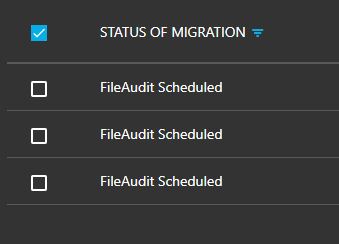
After the audit completes, you can view the results:
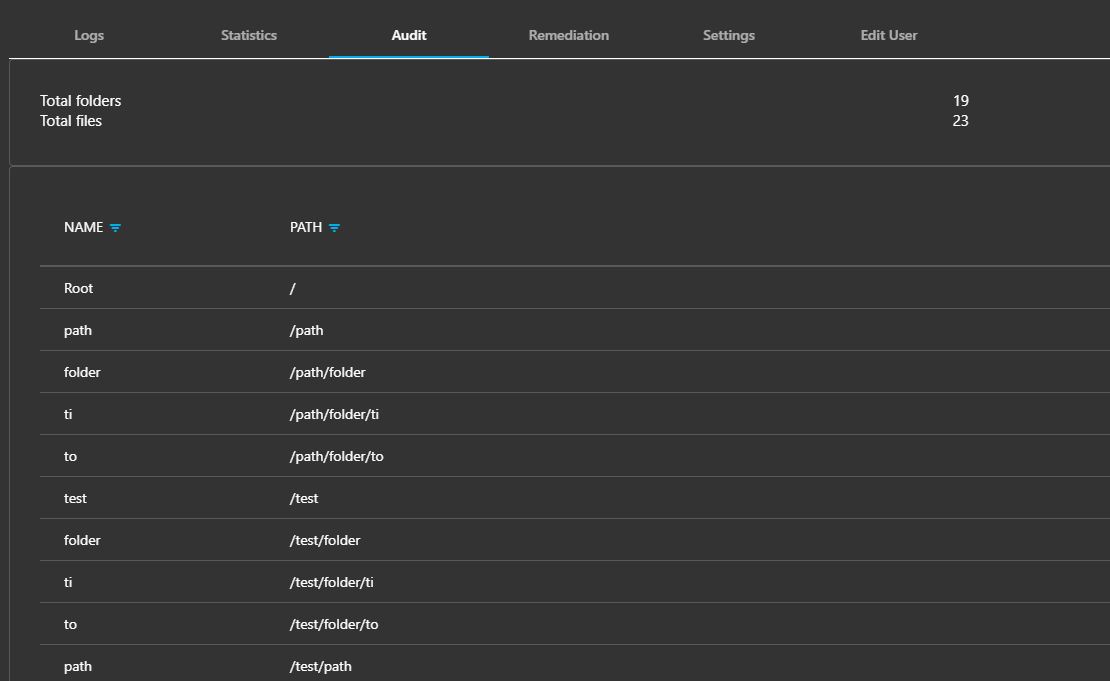
Step 6: Preprocessing
The preprocessing step prepares the target Google Drive accounts and creates necessary folder structures.
To run preprocessing, select the users and click MIGRATION > Preprocess.
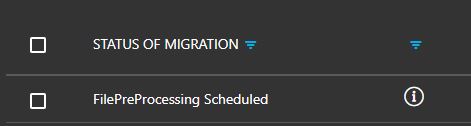
After preprocessing completes successfully:
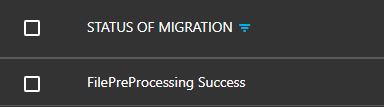
Step 7: Run Migration
Start the migration to copy Dropbox files to Google Drive.
Select Users
Select the Dropbox users you want to migrate.
Start Migration
Click MIGRATION then Start.
Monitor Progress
Monitor the migration progress in the logs table.
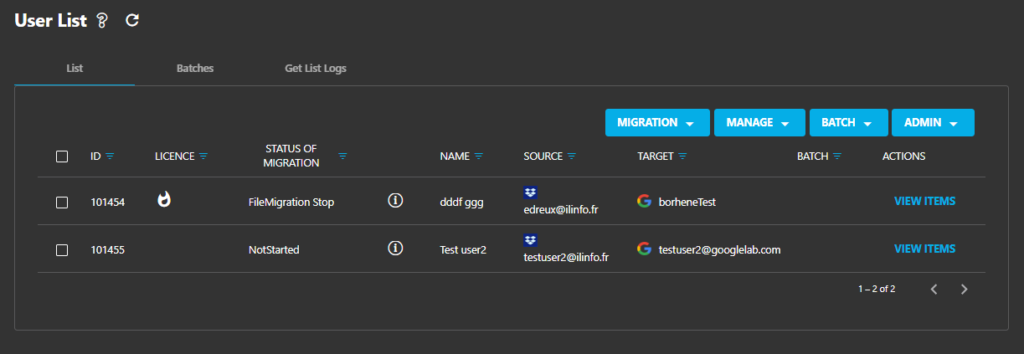
Migration progress view showing real-time file transfer status
Migrate to Specific Folder
It is possible to split and reorganize your content during migration.
In particular, you may want to migrate only specific folders or to migrate content to a specific folder within Google Drive. You can refer to the following article to determine how to configure the migration platform for these specific scenarios:
How to migrate files from or to a specific folder
Exclude Folder
If you want to exclude different folders from the migration, enter the Folder ID in the exclusion settings. For Dropbox migrations, you only need to define the Folder ID — you don't need to set the path.
You can get the Folder ID from the Dropbox URL. The folder ID is the character chain following "home/" in the URL.
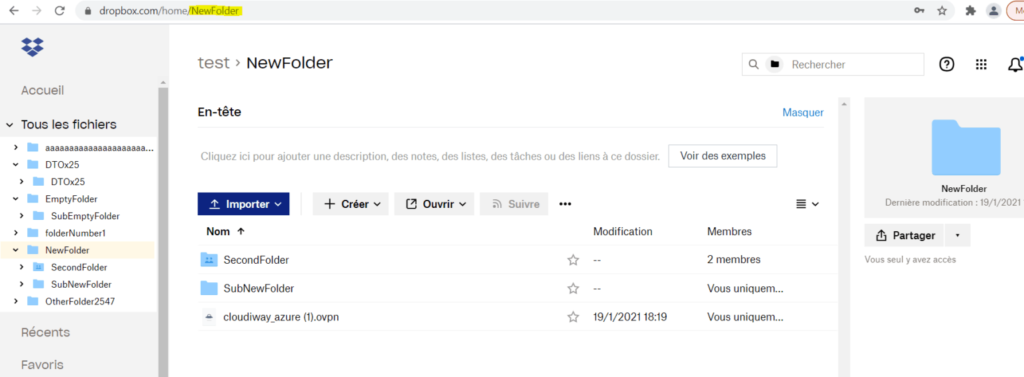
Configure folder exclusion by entering the Folder ID
Delta Pass
Cloudiway supports delta passes for Dropbox migrations. After the initial migration:
- Only new or modified files since the last migration are copied
- New folders are created
- The platform does not duplicate content
How to Start a Delta Pass
Simply restart the migration on the same users. Cloudiway automatically detects what has already been migrated.
Frequently Asked Questions
Can I migrate Dropbox folders to Google Drive?
Yes, Cloudiway supports migrating Dropbox folders to Google Drive. Files, folder structures, and permissions are migrated.
Are Dropbox permissions preserved during migration?
Yes, Dropbox permissions are mapped to Google Drive permissions using the mapping table. User permissions are preserved.
Can I migrate Dropbox shared links?
Dropbox shared links are not migrated as-is. You will need to recreate sharing links in Google Drive after migration.
What happens to Dropbox Paper documents?
Dropbox Paper documents are converted and migrated to Google Drive. The content is preserved in a compatible format (typically as Google Docs or HTML).
Can I migrate to Google Shared Drives?
Yes, Cloudiway supports migrating Dropbox content to Google Shared Drives (formerly Team Drives). Select "Shared Drive" as the target type when configuring the migration.
How long does the migration take?
Migration time depends on the volume of files, their sizes, and network conditions. The audit phase provides estimates. Typical migrations can process several GB per hour.
Get a free migration quote in minutes — entirely self-service.